 Elysian Realms
Fact sheet
- Title
- Elysian Realms
- Developer
- Promethean Ventures — a father-and-daughter team
- Genre
- Tower defense, with persistent progression
- Platform
- Windows (PC). Other platforms are not announced.
- Release
- Not yet announced
- Price
- Not yet announced
- Players
- Single player
- Languages
- English and Spanish, complete. Portuguese (Brazil), German and French cover the menus, HUD and screens and are still being finished. Switchable in Options without restarting; anything untranslated draws its English rather than going blank.
- Engine
- Hand-written JavaScript and HTML Canvas, packaged with Electron. No game engine, and no third-party runtime dependencies.
- Companion book
- In progress — a Chronicle, Field Manual and Almanac for the realms. Planned for Amazon in paperback and Kindle; not yet published.
- Website
- elysian-realms.com
- Contact
- hello@elysian-realms.com
Release date, price and store links are not set.
Description
One line
A pixel-art tower defense of seven realms, where the run ends but the progress does not.
Short — about 50 words
Elysian Realms is a tower defense for PC. Hold the road across seven realms, each with its own rules, weather and written theme. Every run feeds a seven-branch skill tree that keeps growing past its own maximum, so losing is how you get stronger. Includes an endless mode and a recorded soundtrack.
Longer — about 140 words
Elysian Realms is a tower defense built around what happens after the run ends.
Seven realms stand between the Onslaught and the keep, and each one changes a rule rather than a skin: one splits the road, one hides half the field, one turns your own luck against you. Each is played in three eras, which are not three difficulties: the realm as it first stands, the realm a generation on with weapons neither side had before, and the realm’s own unmaking.
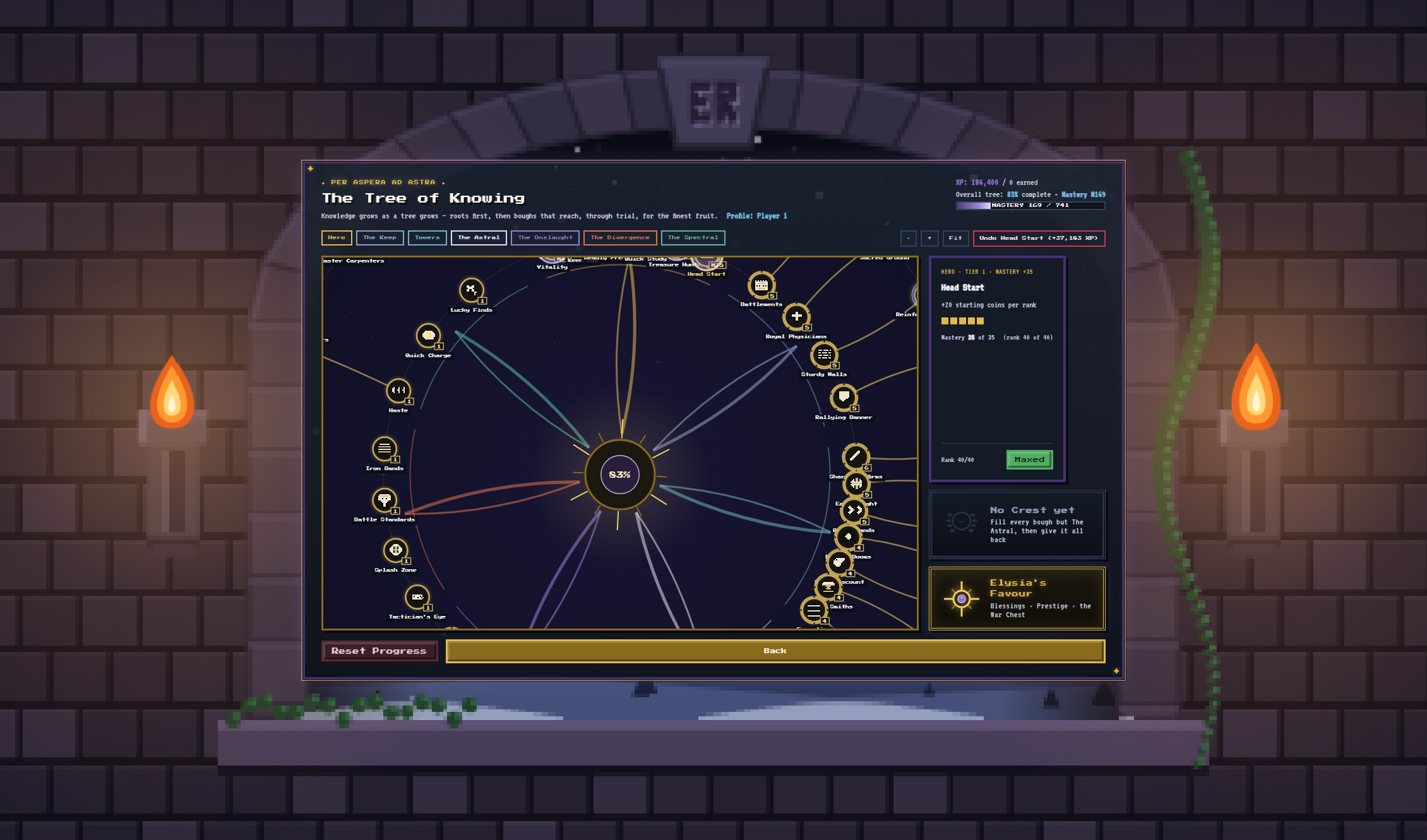
What carries between runs is the skill tree — seven branches, hundreds of ranks, and a Mastery tier that continues past every node's stated maximum. When it is finished, a Crest resets it in exchange for a permanent bonus, and the tree is worth growing again.
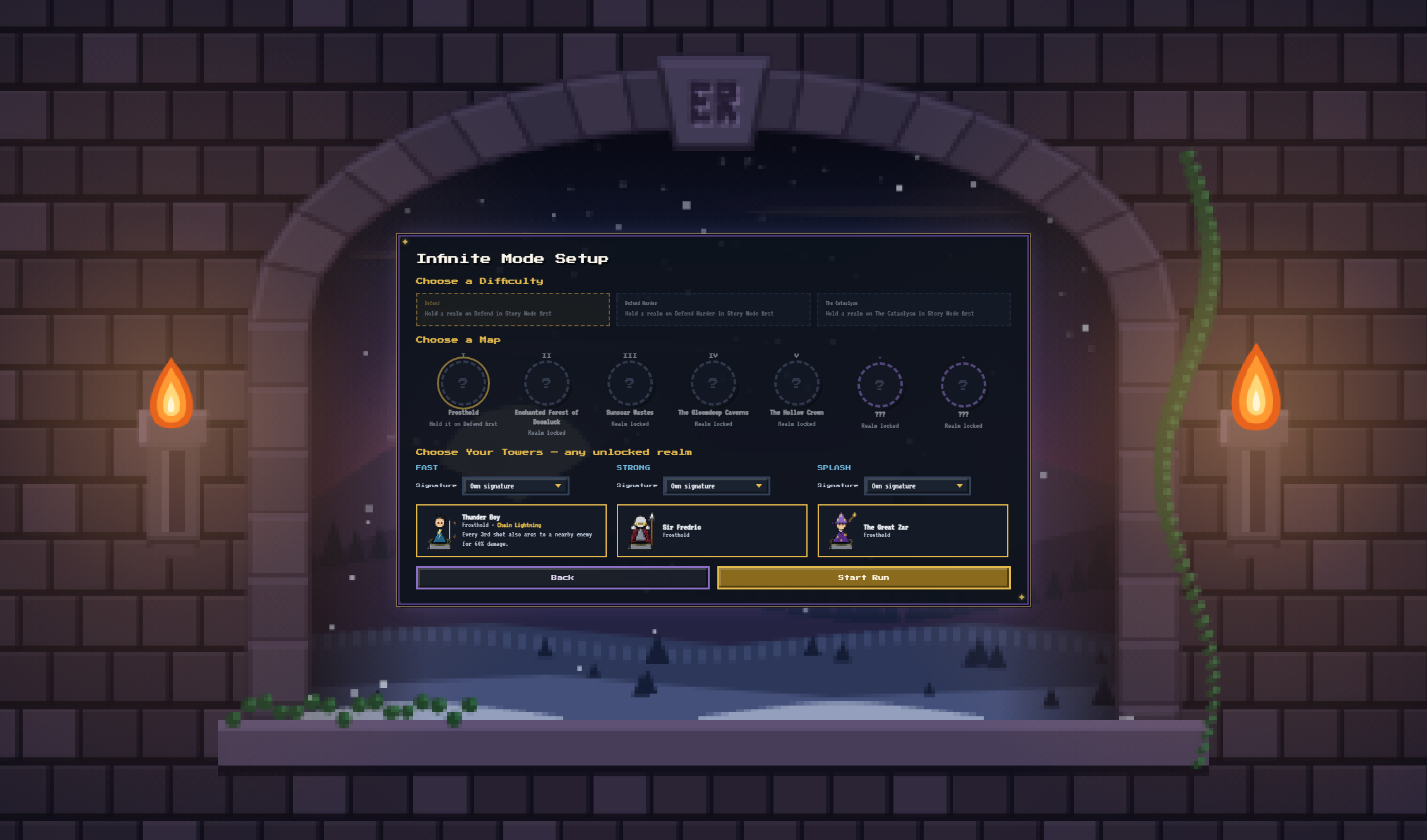
There is also an endless mode. Nobody has reached the end of it.
Features
- A companion book is being written alongside it — the history of the realms and a field manual for holding them, illustrated with the game’s own art.
- Seven realms, each changing a rule of the game rather than its scenery — one splits the road, one hides half the field, one turns the player’s own luck against them.
- Three eras per realm, not three difficulties. The first campaign is fought before Aura Orbs have been invented and does not contain them. The second is a generation later, both sides better armed. The third is the Cataclysm: strikes falling from the sky and a sea that can be slowed but not stopped, with every realm’s music re-recorded for it.
- A skill tree of seven branches that continues past its own maximum, and a Crest that trades the whole tree for a permanent bonus.
- Endless mode. Enemy health, speed and numbers keep climbing; the furthest run recorded in testing reached wave 1,095.
- A written score — forty-nine recorded pieces: every realm six times over — its theme, its Veil, its Crown, and all three again unmade — plus the moments that matter, with layers that rise over the realm's own theme during a boss wave.
- Built for children and for adults. Short sentences, no jargon, a guided first run, and a difficulty curve that starts gentle and does not stay there.
- Accessibility settings throughout: thirteen colour themes, a Calm mode that stops every animation at once, adjustable text and panel size, rebindable keys, and no flashing that cannot be turned off.
- Five languages — English and Spanish complete, with Portuguese, German and French covering the menus and the battlefield while the longer writing is finished. Switched from Options without restarting: the screen you are standing on redraws in the new language, and anything not yet translated falls back to English rather than going blank.
- Steam Cloud. Saves follow the player between machines, and a screen in the game lists what is in the cloud profile by profile so one can be brought down on its own rather than the whole save landing on top of what is there.
- Offline and self-contained. No account, no advertising, no analytics, no telemetry. The game opens no network connection of its own. The Steam version asks Steam to carry the save between machines and to record seven stats, both of which the player can switch off; every other build does neither.
Screenshots
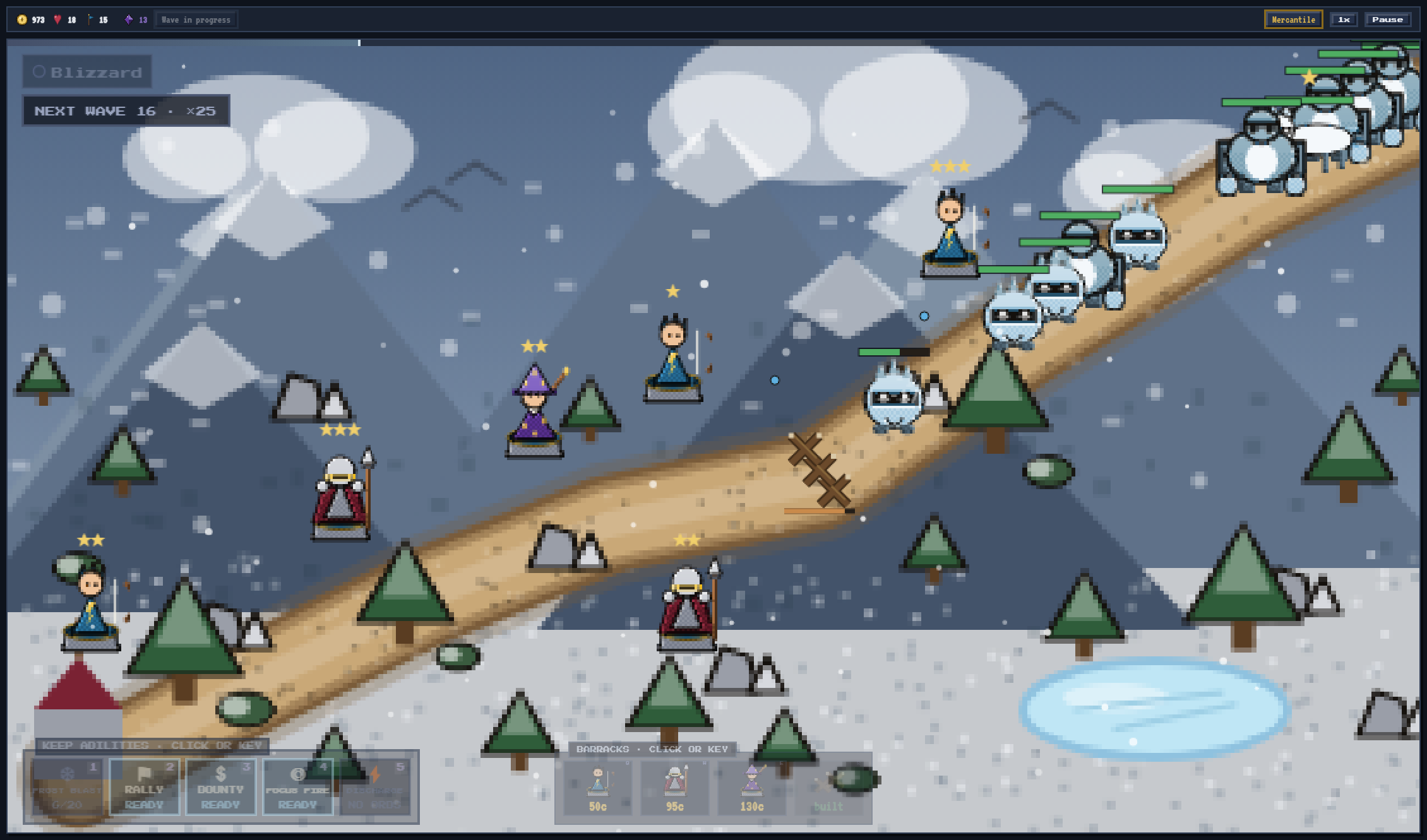
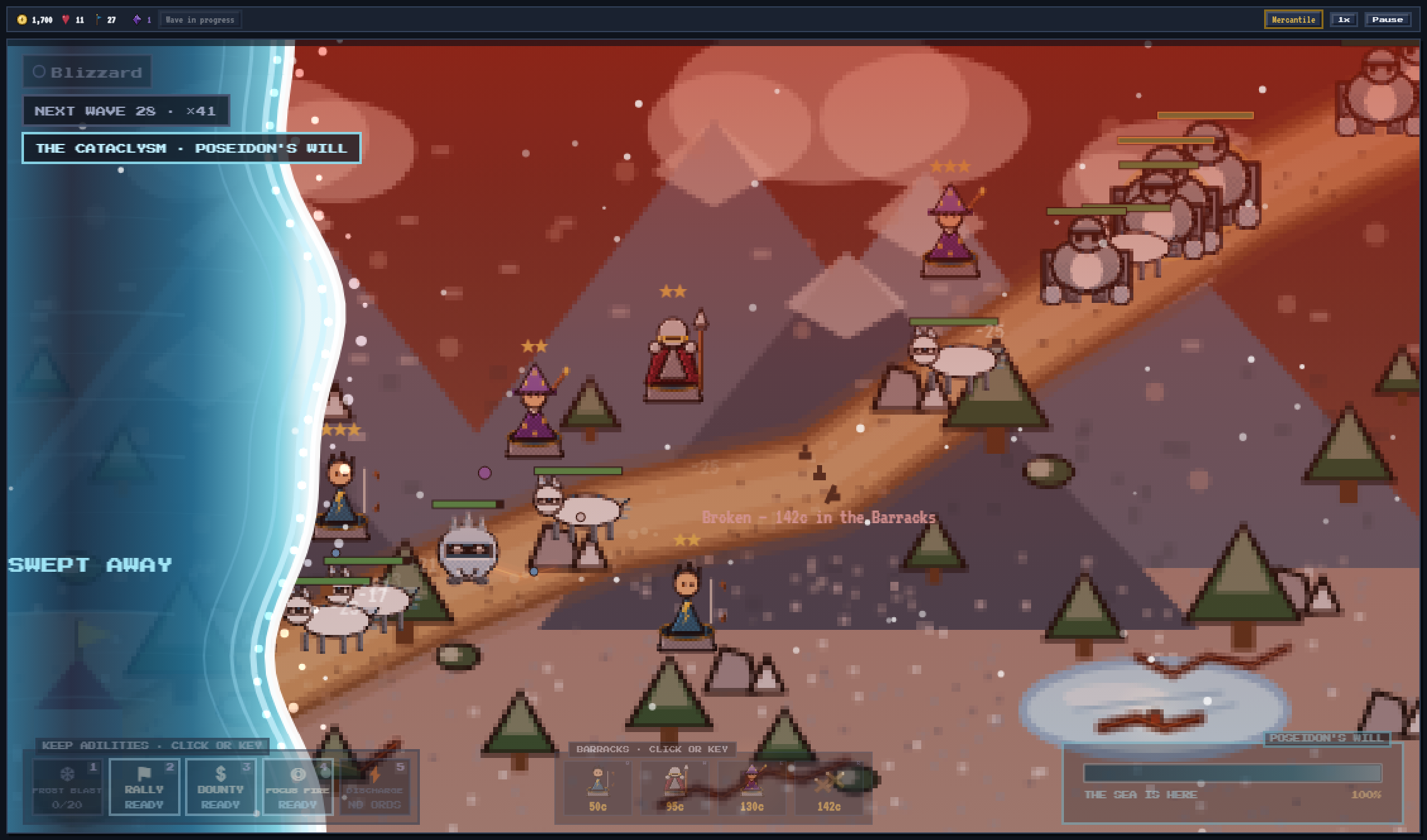
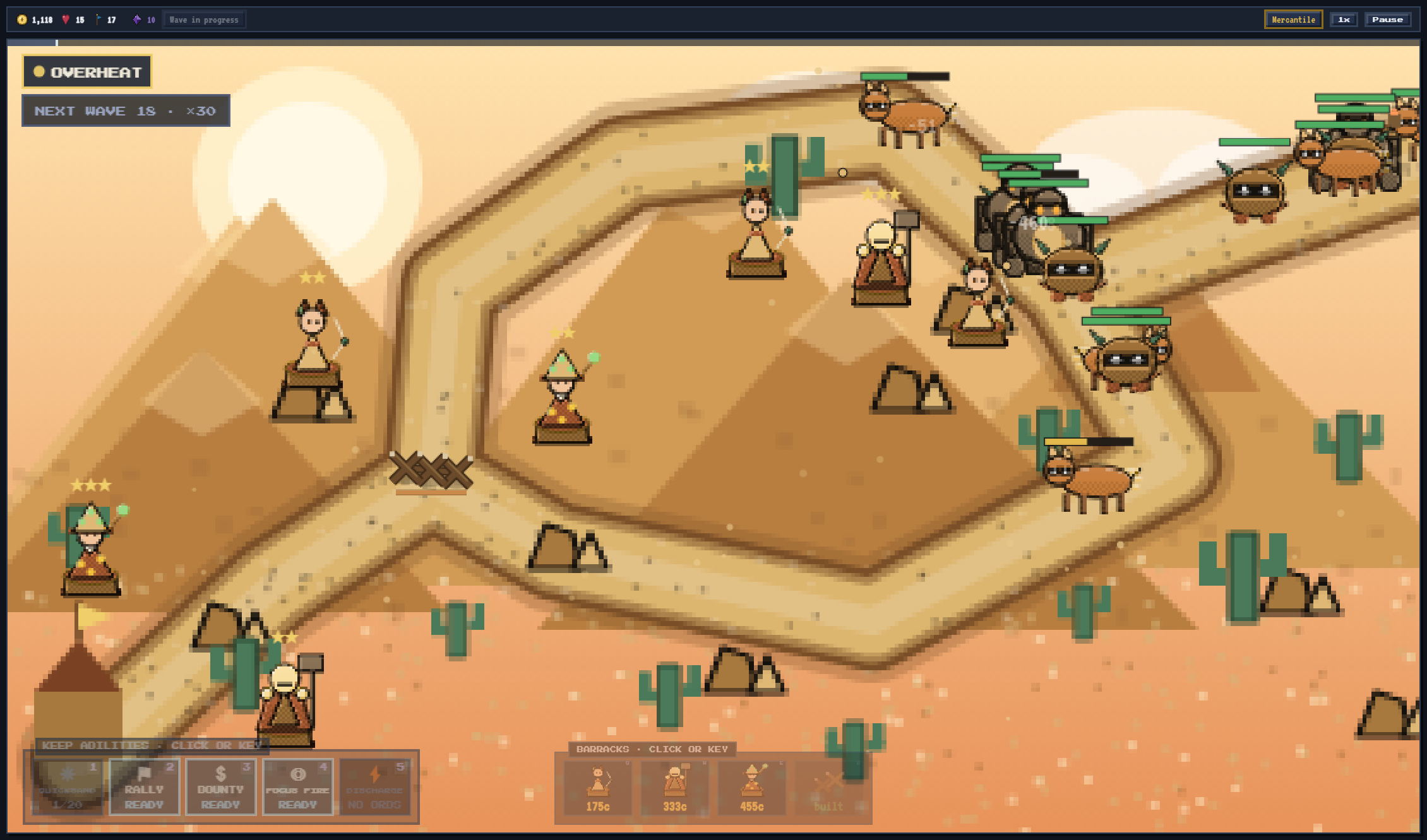
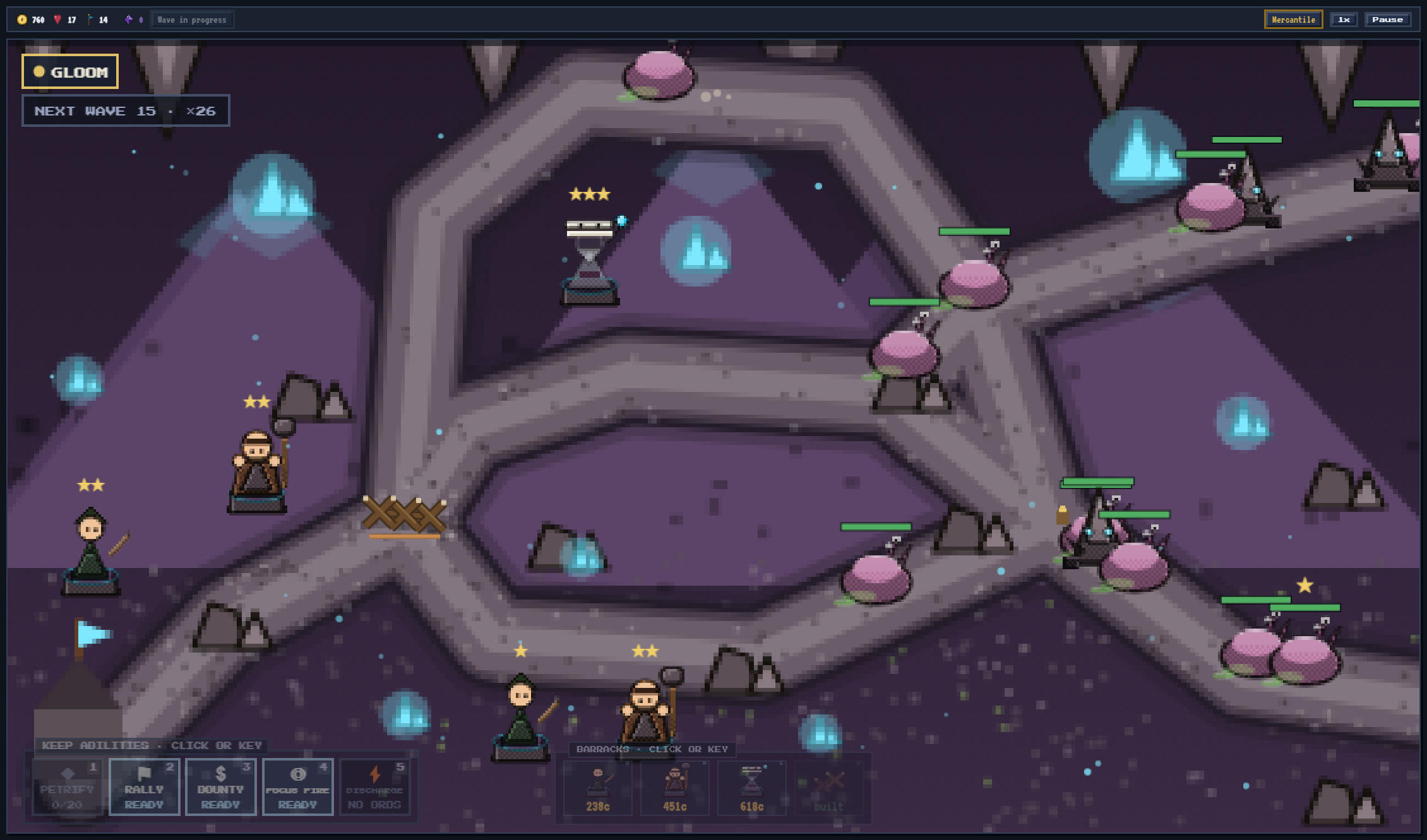
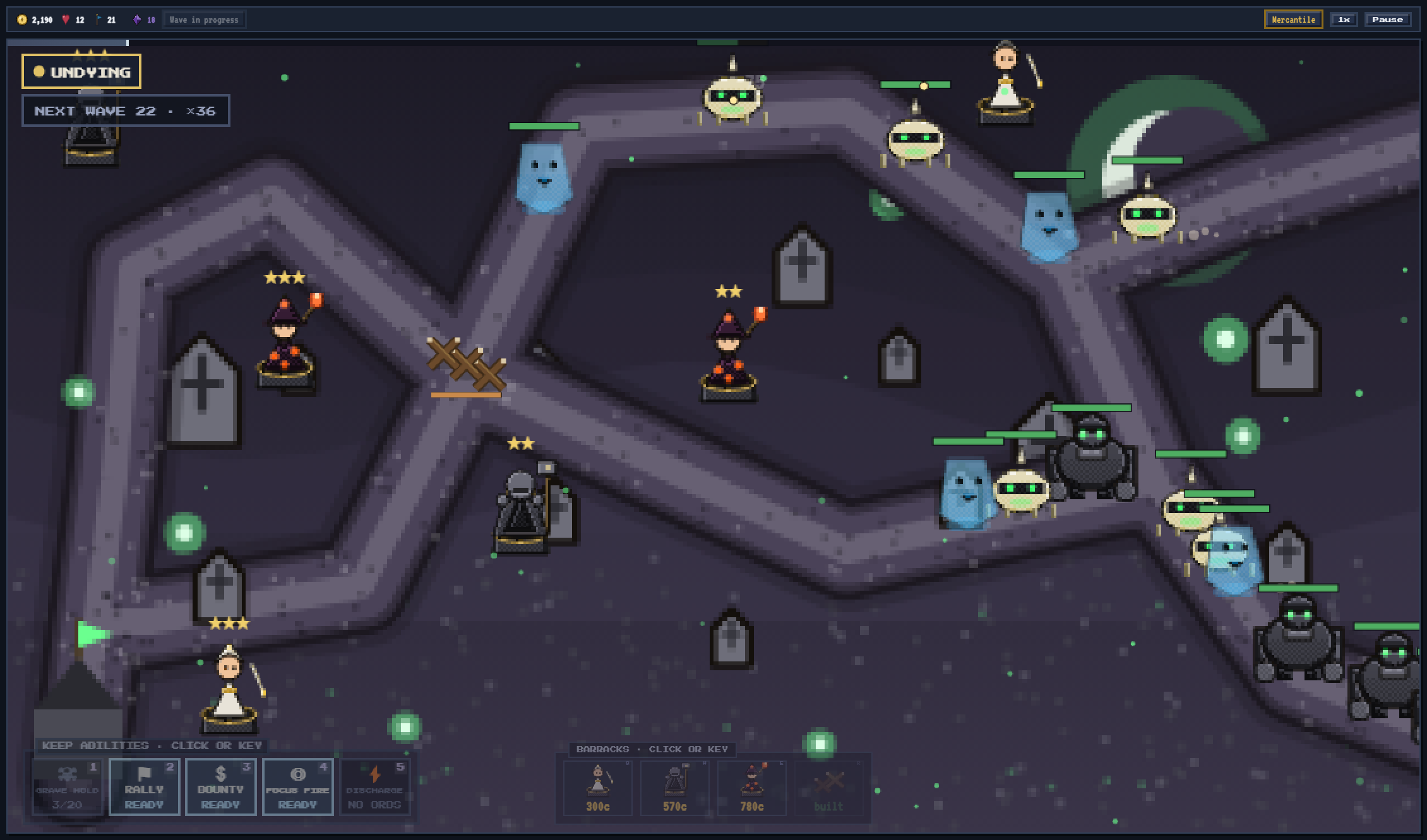
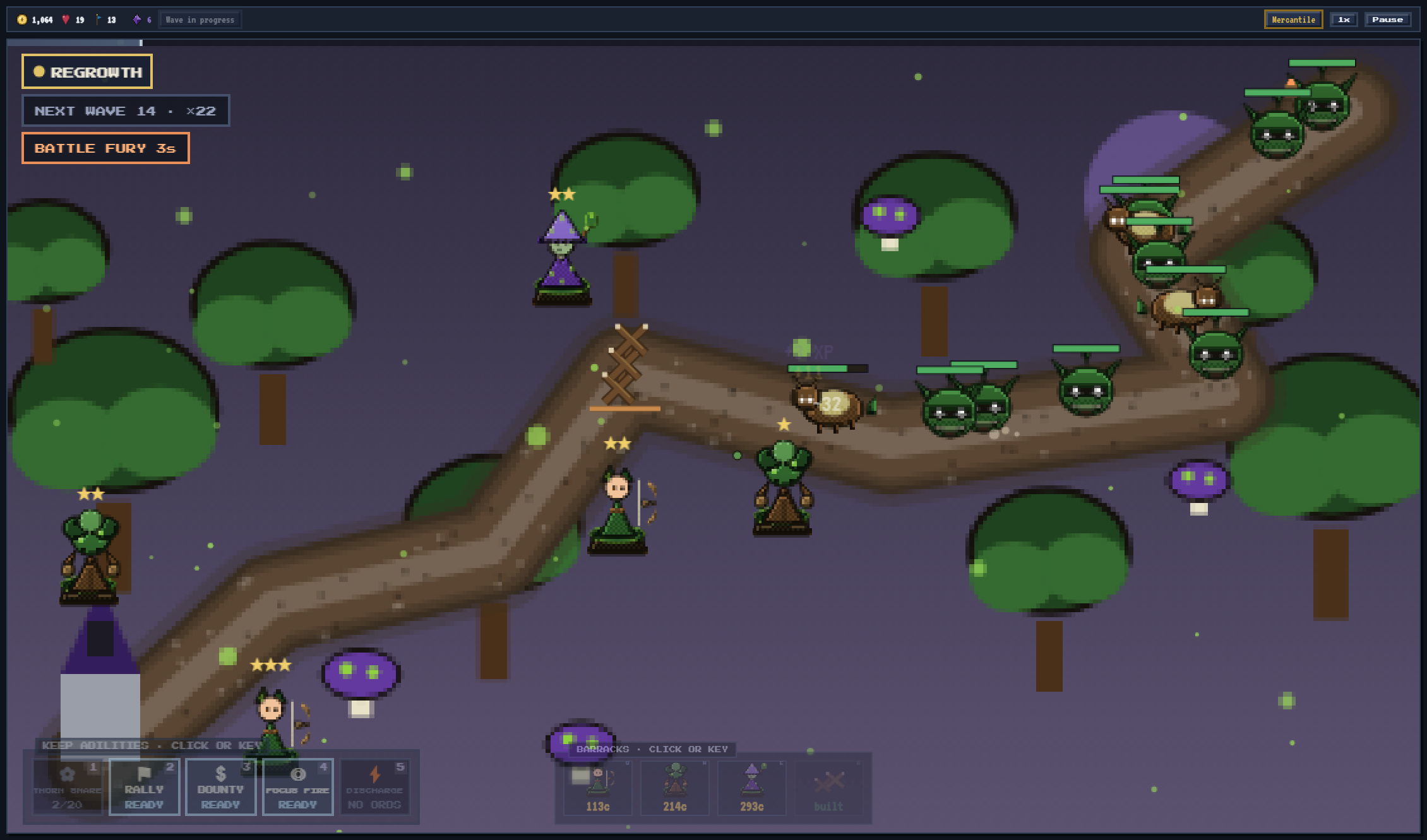
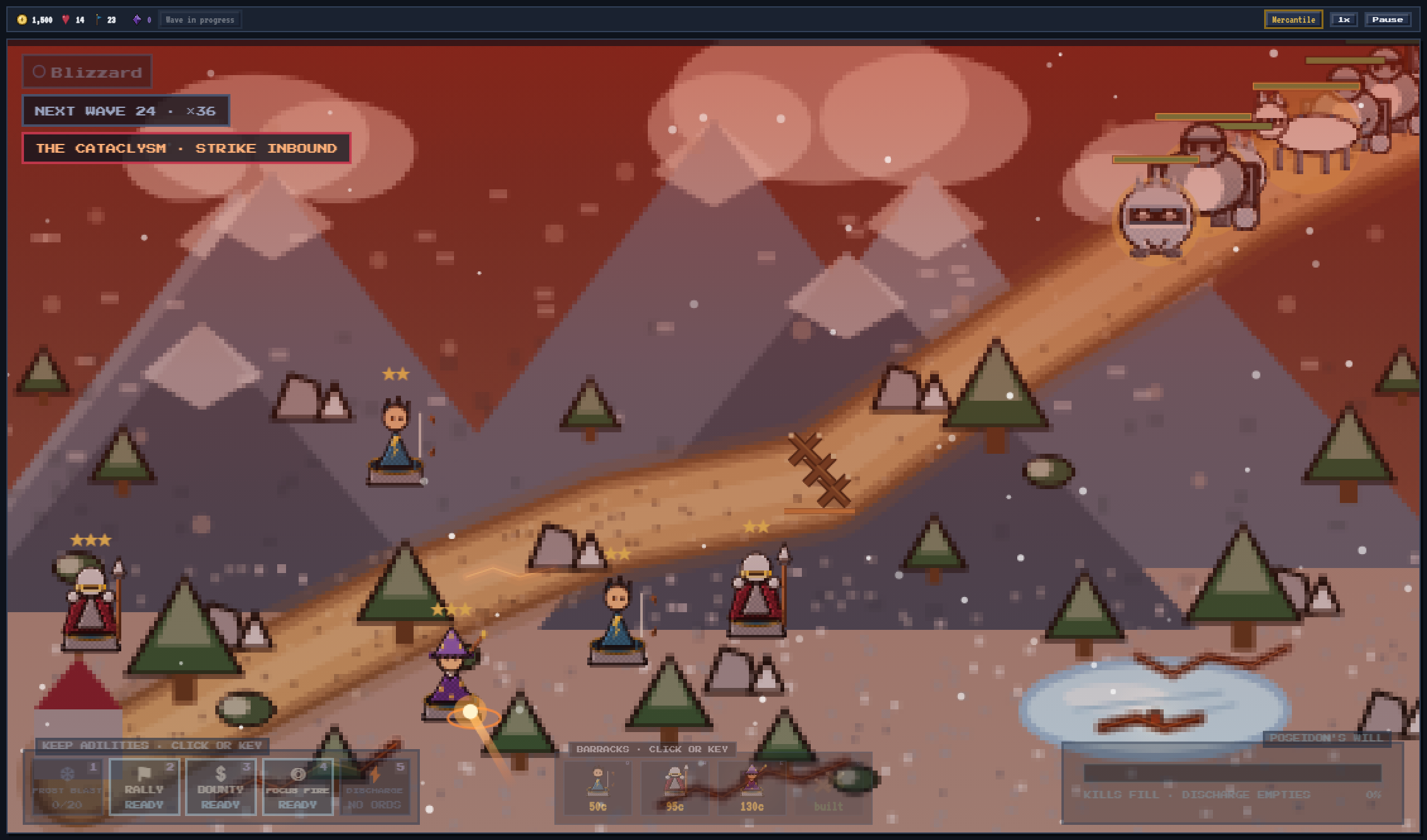
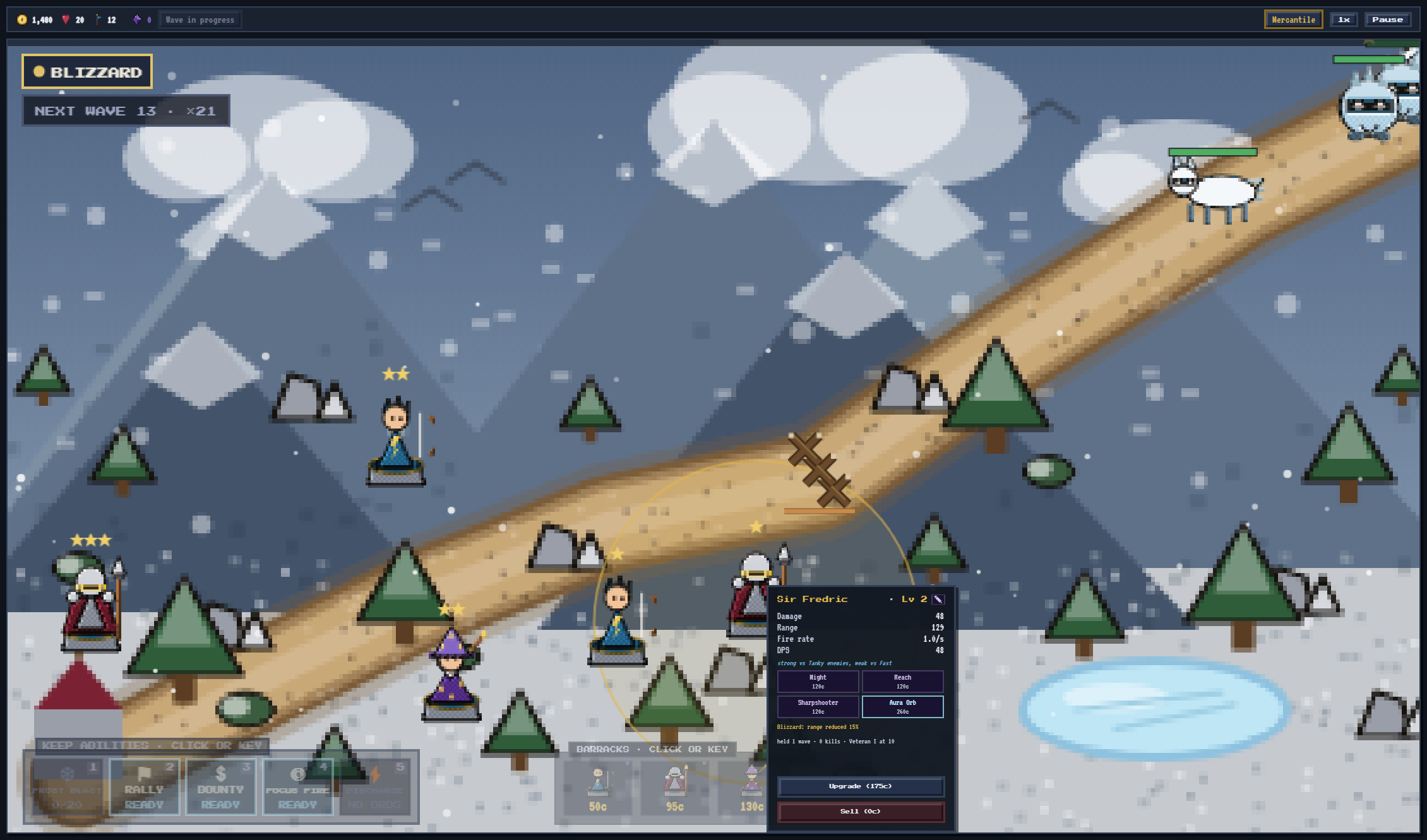
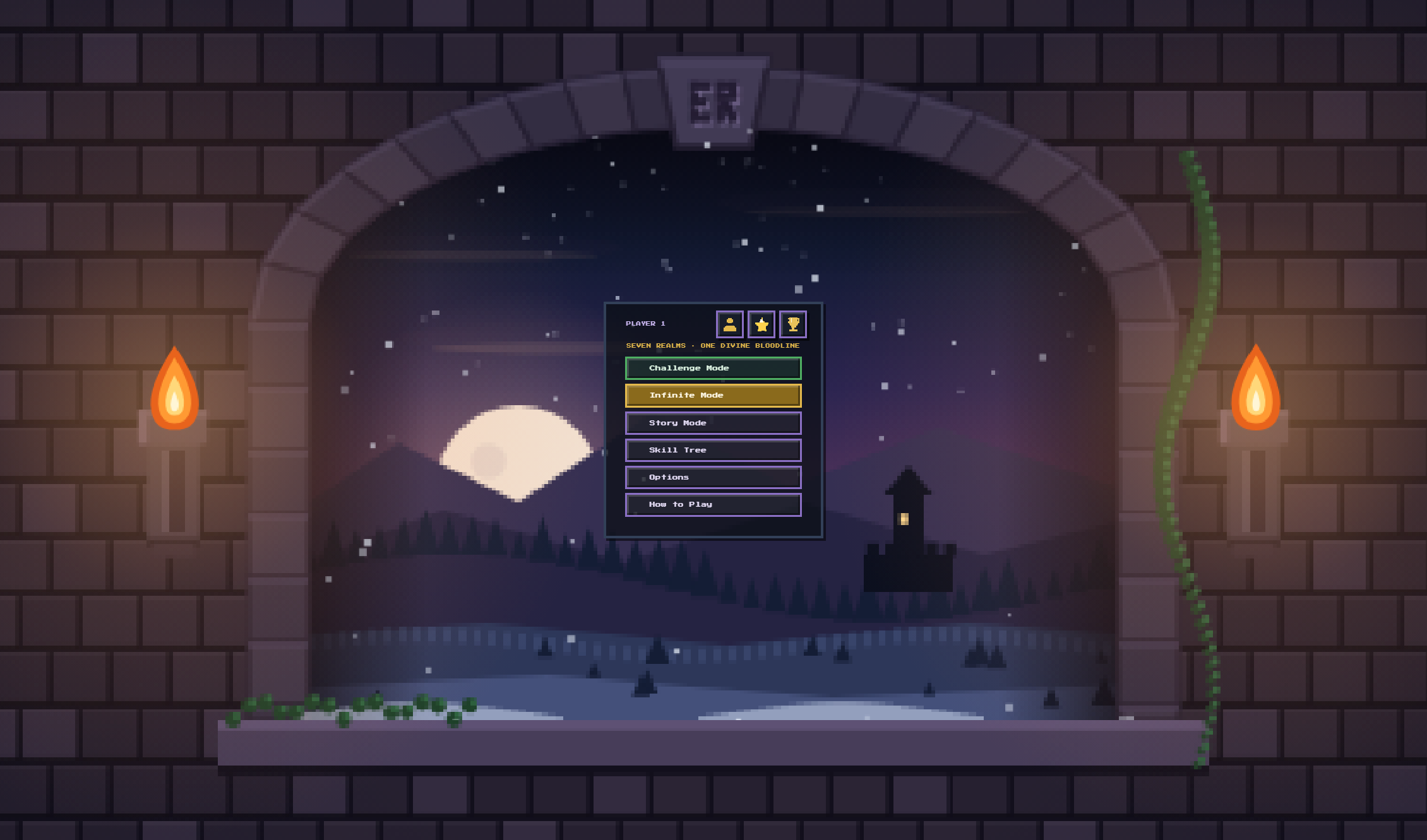
Eleven, captured from the running game at 2260×1331 — the whole frame, interface included, at twice the art's own resolution so nothing is softened. Click any one for the full file. Free to use in coverage of the game, unaltered or cropped, with no need to ask.
Downloads
- Press kit (.zip) — all eleven screenshots at full size, a contact sheet of them, the logo and the icon, and the game’s 149 achievement icons as individual PNGs.
- Playable demo — in the browser, nothing to install.
Terms
You may use any image, video or audio from this page in coverage of the game — articles, videos, streams, thumbnails — without asking and without a fee. Monetised videos and streams are fine. The only thing asked is that the game is named.
Everything else is reserved: the assets are not public domain, and they are not for use in other games, merchandise, or anything implying the developer endorses another product.
Who made it
Elysian Realms is a father-and-daughter home-education project that snowballed into something far grander than the sum of its parts. It began as a lesson in how a game is actually put together — one of them designing the realms and naming the enemies, the other writing the code and the music — and kept going until it was a game worth selling.
Everything in it was made for it. No publisher, no outsourced art, no licensed assets, and a score that is composed and recorded rather than generated. Three years of evenings, and a nine-year-old who is credited because she earned it.